


Interior AutoCAD & Technical Drawings in London
Planning an interior renovation but unsure which drawings your builder, electrician or joiner actually needs?
You may already have a design concept, planning drawings or an architect’s floor plan, but your contractors need clear dimensions, electrical positions, lighting layouts and joinery details before they can start work on site.
Oraanj provides interior AutoCAD and technical drafting services in London, producing clear drawing packages for homeowners, architects, contractors and property developers.
Here are answers to the most common questions clients ask about interior technical drawings, M&E plans and CAD packages.
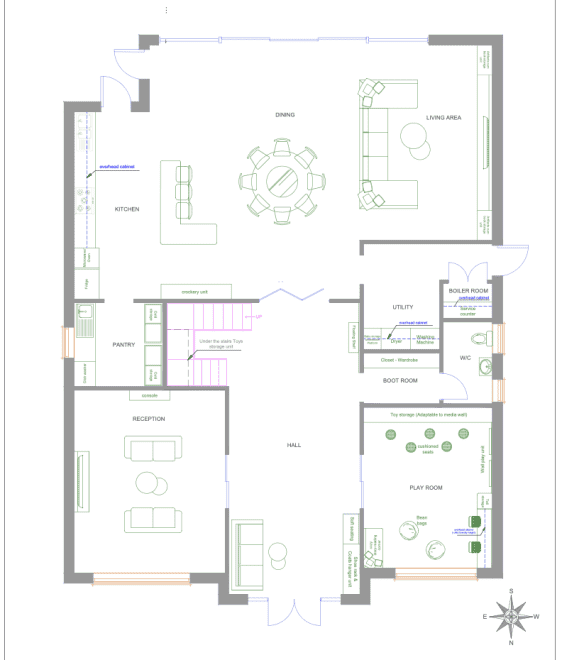

1. My builder has asked for technical drawings, but I only have a 3D interior design. What exactly do I need?
We deliver integrated packages that align with full design and build services.
Every drawing package is prepared for contractor execution across building and construction services.
Our technical packages support comprehensive interior architecture.
We coordinate spatial layouts alongside detailed mechanical & electrical CAD drawings.
A 3D image shows how your room could look, but it may not provide the measurements and installation details your builder needs to construct it.
To carry out the work accurately, tradespeople usually need dimensioned 2D AutoCAD drawings.
These show exact wall dimensions, furniture layouts, lighting and switch positions, radiator and plumbing connections, and joinery elevations.
A technical drawing package translates your visual design into clear, buildable instructions for the site team.
2. I already have architectural drawings. Why is my builder asking for interior AutoCAD drawings as well?
Architectural drawings usually focus on the building layout, structure and architectural requirements.
They may not specify interior details such as where light switches, double sockets and wall lights should go, where tile patterns should begin, or how bespoke wardrobes and media units should be built.
Interior AutoCAD drawings focus on these interior elements, helping prevent costly misunderstandings during first-fix and second-fix installation.
3. I’m renovating my house. Which drawings should be completed before the electrician starts work?
Before electrical first-fix work begins, the room layouts and important electrical requirements should be coordinated.
An electrician usually requires:
- A small-power plan showing double sockets, fused spurs, shaver sockets and floor sockets
- A lighting layout showing ceiling spotlights, pendant locations, LED strip lighting, wall lights and 5-amp lamp sockets
- A lighting switching schedule showing which switches control which circuits and where two-way switching is needed
- Data and AV positions for televisions, Wi-Fi access points and smart home systems
Planning these positions in advance prevents surface trunking, trailing cables and having to chase into newly plastered walls later.
4. What are M&E drawings, and do I need them for a home renovation?
M&E stands for Mechanical and Electrical.
Mechanical services may include heating, ventilation, air conditioning and plumbing. Electrical services include power, lighting, data and fire alarms.
For residential renovations, an interior M&E drawing coordinates these services with the interior layout.
It helps ensure radiators don’t block furniture, extractor vents are routed properly, and lighting works alongside ceiling features, skylights and beam positions.

5. I don’t want sockets showing in the wrong places after my renovation. How can I plan them properly?
Start with your furniture layout rather than choosing socket positions on an empty floor plan.
Consider where you will place beds, sofas, desks and kitchen appliances.
For example, bedside sockets need to align with bedside table heights, television sockets should be hidden behind screens, and desk sockets should support computer equipment.
A small-power drawing marks the exact position and mounting height of every socket.
6. My electrician is asking where I want all the spotlights. How do I decide their positions?
Avoid arranging spotlights simply in a uniform grid across the ceiling.
Instead, think about what needs to be illuminated: worktops in a kitchen, artwork on a wall, a reading chair or an architectural feature.
A lighting layout combines general background light with focused task lighting and decorative illumination, specifying positions, beam angles and switching arrangements.
7. I’m installing a kitchen island. How do I make sure the pendant lights and electrical points are positioned correctly?
The kitchen layout should be finalised before the lighting and electrical positions are agreed.
The position and dimensions of the island determine where floor sockets, hob feeds and pendant lights should be located.
An interior drawing coordinates the ceiling and floor services with the kitchen cabinetry plan so that cables emerge in the correct locations.
8. I want a bespoke media wall with a TV, fireplace and hidden cables. What drawings will the joiner need?
A bespoke media wall usually needs more than a 3D visual.
Depending on the design, the joiner may need a dimensioned front elevation, a vertical section drawing and a plan view.
These drawings clarify cabinet depths, cable management routes, television mounting recesses, LED strip integration, ventilation for AV equipment and the locations of power sockets and data points.

9. My joiner says the wardrobe design isn’t detailed enough to manufacture. What information is missing?
A 3D wardrobe image may show its appearance without explaining how it should be constructed.
The joiner may need detailed drawings showing:
- Internal layout (hanging rails, drawers, shelving and shoe racks)
- Dimensions, including plinth heights, cornice details and door widths
- Material thicknesses and panel finishes
- Integrated LED lighting channels, driver locations and sensor positions
- Scribe margins to accommodate uneven walls and ceilings
10. What’s the difference between a floor plan, a wall elevation and a section drawing?
Each drawing shows the interior from a different perspective.
Floor plan: A view from above, showing wall positions, door swings, room dimensions and furniture layouts.
Wall elevation: A straight-on view of a wall, showing the height and width of joinery, wall lights, tiles and architectural mouldings.
Section drawing: A view showing an element as if cut through, revealing internal depths, shelf spacing, cable routes and construction details.
11. My builder keeps calling me to ask where things should go. Would proper drawings reduce these questions?
Detailed drawings can reduce the number of decisions that need to be made on site.
They provide a reference for agreed positions, dimensions and finishes.
This allows tradespeople to continue work without having to wait for daily decisions or risk installing items in the wrong place.
12. I’ve received different quotations from joiners and contractors. Can technical drawings help me compare them?
Yes. A clear drawing package can help contractors understand the same proposed scope of work.
For example, a joinery drawing specifying materials, dimensions and internal configurations allows joiners to price the same requirements rather than making their own assumptions.
This makes quotations easier to compare.

13. I only have an estate agent floor plan and photographs. Can someone prepare AutoCAD drawings from those?
Potentially, yes, but estate agent plans are generally intended for marketing and may not provide the accuracy needed for construction.
They often exclude wall thicknesses, ceiling heights, window positions and chimney breast dimensions.
For technical drafting, it is usually preferable to begin with an accurate measured survey or architectural drawings.
If these are not available, verified site measurements can be taken to establish accurate base drawings.
14. Can I get technical interior drawings without booking a full interior design or renovation service?
Yes. Technical drafting can be arranged as a separate service where your requirements and existing design information are already clear.
Oraanj can prepare interior AutoCAD packages, electrical layouts, joinery drawings or 3D visualisations for projects where you already have a builder, project manager or architect in place.
15. I’m renovating a flat in London. Can technical drawings help with a Licence to Alter application?
Technical drawings can provide useful information about proposed changes to your flat.
Depending on the lease and the building’s freeholder, the managing agent or surveyor may ask for:
- Before and after floor plans showing layout changes
- Drainage and plumbing routes for new bathrooms or kitchens
- Proposed electrical layouts
- Flooring build-ups and acoustic underlay specifications
Detailed drawings can help freeholders and surveyors review the proposal more easily.
16. Are interior AutoCAD drawings the same as Building Regulations drawings?
No. They serve different purposes.
Interior AutoCAD drawings may communicate furniture layouts, wall finishes, lighting positions and joinery details.
Building Regulations drawings focus on compliance with statutory standards, including structural calculations, fire safety, thermal insulation, drainage and ventilation.
These are usually prepared by an architect or structural engineer.
Interior drawings should coordinate with those technical requirements.

17. I want to see how the technical drawings will look in real life. Can they be turned into 3D images?
Yes. A 3D visualisation can be developed using the agreed layout and design information.
This can help you understand how materials, lighting, bespoke joinery and furniture proportions work together before construction begins.
Seeing a photorealistic render can also help you confirm choices before builders begin installing finishes.
18. What drawing files should I ask for so my builder, architect and joiner can use them?
The most common formats include PDF and DWG.
PDF drawings are convenient for viewing, printing and sharing with contractors on site.
DWG files are editable AutoCAD files that allow architects, structural engineers and specialist joiners to incorporate the information into their own drawings.
It is usually helpful to have both formats for a renovation project.
19. What happens if my builder discovers that the measurements on the drawings are different from the actual site?
The discrepancy should be checked before the affected work proceeds.
The contractor or surveyor may need to verify the measurements on site, and the drawings can then be adjusted to reflect the actual conditions.
Resolving differences early helps avoid errors in joinery manufacturing or the installation of services.
20. What information should I send Oraanj to get started with my technical drawings?
Start by sharing the information you already have.
This might include:
- Existing architectural DWG or PDF drawings
- Photographs or videos of the property
- Any 3D visualisations or mood boards you’ve developed
- A brief description of what you’re planning and what drawings your contractor has requested
- Your project timeline
Our team can review these details and advise on the most suitable drawing scope for your project.

Need Interior AutoCAD, M&E or Technical Drawings in London?
Whether your builder needs wall elevations, your electrician is waiting for lighting positions or your joiner needs detailed wardrobe sections, our team can help.
Share your architectural plans, design concepts or site photographs.
Oraanj can review your project and recommend the right technical drawing package.
Call: +44 (0) 7448 803051
Frequently Asked Questions
Electrical drawings are particularly useful when moving walls, redesigning kitchens, changing lighting layouts or adding significant electrical equipment. They help establish the intended positions of sockets, switches and fittings before construction. Minor decorative work may not need a separate electrical drawing package. The level of technical information should match the proposed work.
An electrical layout typically identifies the proposed positions of sockets, switches, lighting points and relevant equipment. It may also show switching arrangements, circuit references and installation notes. Detailed electrical design can additionally require circuit schedules, load calculations and protective-device specifications, prepared by a competent electrical designer.
A lighting plan concentrates on the location, type and intended control of light fittings. An electrical layout covers a wider range of electrical points, including sockets, switches, appliances and other equipment. The drawings should be coordinated so that furniture, joinery and architectural features do not conflict with electrical installations.
An AutoCAD drawing can communicate the intended layout, but it does not automatically provide a complete or compliant electrical design. The installer must confirm circuit capacity, cable routes, protective devices and applicable safety requirements. Electrical work must be designed, installed, inspected and tested appropriately, regardless of the software used to produce the drawing.
Electrical drawings do not require approval simply because they have been prepared. However, certain electrical installation work in homes in England is notifiable under Part P, including new circuits, replacement consumer units and specified work near baths or showers. Other electrical work may be non-notifiable but must still meet applicable safety requirements.
Ideally, before construction and before ordering fitted kitchens, bathrooms or bespoke joinery. Coordination helps identify conflicts between services, structural elements, ceiling spaces and cabinetry. Changes made after walls and ceilings are closed can require additional work, so important service routes and equipment positions should be resolved during technical design.
Proposed drawings describe the intended installation before work begins. As-built drawings record the installation as completed, including relevant changes made during construction. They can help with future maintenance and alterations. As-built drawings are not a substitute for electrical inspection, testing or any required completion and compliance certificates.

