


Electrical & Lighting Layout Plans London
Plan Your Sockets, Switches & Lighting Around the Interior. Where should the sockets go? Which switch should control which light? Where should the pendant sit above the dining table?
These decisions are much easier to resolve before electrical work begins. Oraanj produces interior electrical and lighting layout drawings for residential and commercial projects in London and, where suitable project information is available, remotely across the UK.
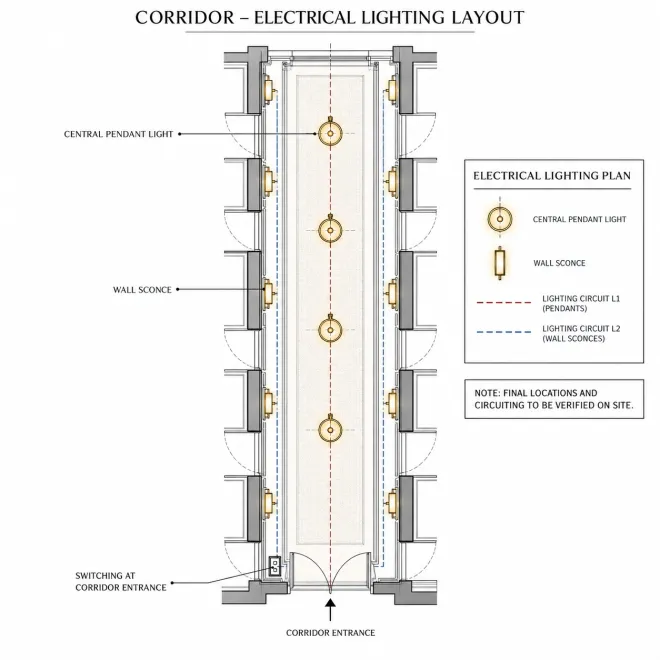
Our layouts coordinate agreed socket, switch, and lighting positions with the furniture plan, bespoke joinery, and wider interior design.

Why Plan the Electrical Layout With the Interior?
We integrate M&E engineering with turnkey commercial design and build.
We provide specialist architectural lighting design.
Our M&E schematics align with detailed layout plans and elevations.
Because Furniture Changes Where Electrical Points Need to Go
An electrical plan should relate to the way the room will actually be used. When these decisions are made separately from the furniture plan, electrical points can end up in inconvenient or visually awkward positions.
Beds & Sofas
Seating & Sleeping Positions
Bed position affects bedside sockets and switches, while sofa position determines floor and table lamp power requirements.
Dining & Kitchen
Tables & Appliances
Dining-table placement dictates pendant centres, and kitchen layouts define worktop sockets and appliance positions.
Work & Media
TVs, Media Walls & Desks
Television and media-wall designs require concealed power and data locations, while desks need accessible charging points.
Fitted Joinery
Wardrobes & Cabinetry
Bespoke wardrobe and shelving designs affect internal LED lighting channels, transformer access, and switch positions.
Our electrical plans form part of comprehensive residential interior design ensuring complete coordination on site.
Electrical circuits are plotted for hospitality venues like the Marylebone restaurant open kitchen and Hampstead lounge bar.

Lighting Layout Drawings Around How the Room Will Be Used
Considered Alongside Furniture, Architecture and Joinery
Lighting should be planned around how the room will be lived in rather than simply arranged in a uniform grid across the ceiling. Depending on the agreed scope, our drawings indicate positions for ceiling, wall, integrated, and portable lighting.
Ceiling
Ceiling Lighting
Coordinating downlights, pendant lights, track lighting, and decorative ceiling fittings around the room layout.
Walls
Wall & Artwork Lighting
Establishing positions for decorative wall lights, bedside reading sconces, and picture or artwork lighting.
Integrated
Joinery & Feature LEDs
Planning wardrobe lighting, shelving illumination, joinery LEDs, under-cabinet lighting, and architectural feature lighting.
Portable
Lamps & Reading Lights
Using the furniture plan to establish suitable socket positions for floor lamps, table lamps, desk lamps, and reading lights.
Socket & Switch Layout Drawings
Put Power Where You Need It & Plan How You Move Through the Space
For a dining venue, explore our restaurant interior design services to balance the guest experience with daily service.
Socket positions should relate to the proposed furniture arrangement, while switch positioning needs to consider how you enter and move through each room across the property.
1. Practical Socket Positioning
Coordinating sockets and charging requirements around bedside tables, televisions, media units, desks, dressing tables, floor lamps, side tables, kitchen equipment, and bespoke joinery.
2. Intuitive Switch Layouts & Zones
Planning switches near room entrances, bedside positions, hallways, staircases, open-plan areas, multiple access points, and distinct lighting zones.
3. Qualified Electrician Confirmation
The final electrical design and switching arrangement should be reviewed and confirmed by the appointed qualified electrical professional before installation.
Lighting plans support venues developed by our hotel interior designers, bar interior designer, and cafe interior designer specialists, including the Notting Hill restaurant and Kingston upon Thames restaurant interior design.
Electrical Planning for Bedrooms & Living Rooms
Resolve the Furniture Plan First, Then Coordinate the Electrics
One of the most common reasons electrical points feel awkward is that the final furniture arrangement was not established first. We coordinate every point around the approved room layout.
Bedrooms
Bedside & Dressing
Coordinating bed position, bedside tables, USB/charging sockets, bedside lighting, switches, TV, dressing table, and wardrobe lighting.
Living Rooms
Seating, Lamps & Media
Planning provision for televisions, media walls, floor and table lamps, side and console tables, artwork lighting, and electric fireplaces.
Shading & Work
Home Working & Blinds
Accounting for home-working desk power, everyday charging, and electrical spurs for motorised window treatments.
Precision
Why 500 mm Matters
Moving a bed by 500 mm affects sockets, switches, bedside lights, TV position, and wardrobes—which is why layout comes first.
Each circuit schedule originates from creative luminaire strategies developed by our in-house lighting design team.
Electrical Planning for Open-Plan Living & Dining
Kitchen, Dining & Living Need to Work Together
An open-plan interior may be one architectural room, but it contains several distinct functional areas—each with different lighting and electrical requirements that must work together harmoniously.
1. Dining Pendant Alignment
The dining pendant needs to relate directly to the agreed dining-table position and circulation paths rather than the geometric centre of the room.
2. Zoned Living Area Illumination
Living-room lighting, floor sockets, and wall switches need to relate to the seating arrangement and allow independent mood control from the kitchen.
3. Cohesive Multi-Zone Switching
Planning kitchen, dining, and living zones together creates a coherent result where each zone can be lit and controlled intuitively.
We serve clients globally through our international interior design practice and locally across prime London.
Kitchen & Bathroom Electrical & Lighting Coordination
Establish the Kitchen & Bathroom Design Before Final Electrical Positions
Kitchen and bathroom electrical requirements depend heavily on the final cabinetry and sanitaryware layouts. We coordinate the interior positions around your agreed designs.
1. Kitchen Electrical & Lighting Coordination
Coordinating worktop sockets, integrated appliances, island pendants, under-cabinet lighting, decorative lighting, dining areas, and charging points around the agreed kitchen design.
2. Bathroom Lighting & Vanity Planning
Considering ceiling lighting, mirror lighting, decorative fittings, vanity areas, cabinet lighting, and other agreed interior electrical positions.
3. Specialist Safety, Loads & Zones
Detailed appliance loads, circuits, isolation requirements, bathroom electrical safety zones, and compliance must be confirmed by the kitchen supplier and qualified electrical professionals.

Bespoke Joinery & Electrical Coordination
Design the Joinery and Electrical Positions Together
For workplaces with reception and team areas, explore our office and workplace interior design.
Bespoke fitted furniture often requires electrical planning before fabrication or first-fix installation begins. Final installation requirements are then confirmed with your electrician and joinery manufacturer.
Media Walls
TV, Fire & AV Storage
Coordinating television positions, power, selected data requirements, integrated lighting, electric fireplaces, and equipment storage.
Wardrobes
Internal & External Light
Planning internal sensor or switched rail lighting, external feature lighting, switch positions, and nearby dressing sockets.
Home Offices
Desk Power & Task Light
Organising desktop power, monitor positions, charging points, integrated task lighting, and clean cable management routes.
Display Units
Display Cabinetry
Coordinating integrated shelf lighting, driver access locations, and concealed electrical provision within alcoves and niches.

Already Have an Interior Design, Architect or Builder?
We Can Review the Project Information You Already Have
If your room layouts and design are already established—or if you already have an architect, contractor, or electrician appointed—Oraanj can review your existing drawings and establish what interior electrical and lighting coordination is still required.
1. What to Send Us for Review
Existing floor plans, DWG files (if available), furniture layouts, interior design/CGI visuals, lighting and joinery drawings, kitchen/appliance information, site photographs, and contractor requirements.
2. Residential Homes & Renovations
Supporting apartments, family homes, townhouses, period properties, individual rooms, and whole-home renovations across living rooms, bedrooms, kitchens, bathrooms, dressing rooms, and hallways.
3. Clear Team Responsibilities
We keep responsibilities clear between Oraanj, your architect, contractor, electrician, lighting specialist, kitchen supplier, and joinery manufacturer.
Drawings are formatted for immediate execution by electricians and our accredited commercial fit-out and construction teams.
Commercial Electrical Layout: Bars, Restaurants & Hospitality
Coordinating Feature Lighting, Service Counters & Guest Seating
Oraanj coordinates interior electrical and lighting requirements for selected commercial hospitality projects—including restaurants, cafés, bars, and boutique hotel interiors.
1. Dining Tables, Banquettes & Atmospheric Lighting
Aligning feature pendants, wall sconces, and banquette illumination with seating layouts to support day-to-evening ambience.
2. Bar Counters, Back-Bars & Service Stations
Coordinating interior lighting and proposed power positions around bespoke bar joinery, bottle displays, and reception desks.
3. Specialist Commercial & Statutory Systems
Commercial projects involve additional statutory requirements; specialist electrical, M&E, fire, emergency lighting, commercial kitchen, and data systems must be designed or confirmed by qualified professionals.
Salons, Retail Spaces & Office Electrical Coordination
Aligning Task Lighting, Styling Stations, Displays & Workstations
In salons, retail stores, and offices, every styling mirror, display shelf, reception desk, and workstation depends on accurate coordination between furniture, joinery, and electrical points.
1. Salon Styling Stations & Treatment Rooms
Coordinating mirror lighting, appliance sockets at each styling station, washbasin illumination, and reception counter power around the salon floor plan.
2. Retail Display Joinery & Feature Lighting
Planning track lighting, illuminated shelving, window display points, and point-of-sale counter power around retail merchandising zones.
3. Office Desks, Meeting Rooms & Breakout Zones
Aligning workstation power, boardroom AV/table positions, acoustic pod lighting, and tea-point sockets with the workplace layout.

What Oraanj’s Electrical Layout Is — and How We Work
Interior Electrical Coordination vs. Specialist Engineering & Clear Pricing
Oraanj’s electrical layout drawings communicate interior design requirements and proposed positions within our agreed design scope. They are not a substitute for electrical or M&E engineering.
1. Interior Coordination vs. Qualified Engineering
Oraanj coordinates proposed socket, switch, and lighting locations with furniture and joinery. Qualified electricians and M&E engineers remain responsible for circuit design, cable sizing, loads, distribution boards, HVAC/mechanical services, safety, testing, certification, and compliance.
2. Our 7-Step Drawing Process
Send project information → Establish furniture layout → Confirm requirements → Produce proposed drawing → Client review → Coordinate with wider team → Issue final drawing in agreed PDF or DWG format.
3. Tailored Drawing Fees
Fees depend on the number of floors and rooms, whether an accurate DWG/furniture layout already exists, lighting and bespoke joinery complexity, and required deliverables.
To ensure every pendant and socket coordinates with furniture positions, explore our complete portfolio of architectural layouts.
Planning Your Electrical & Lighting Layout?
Oraanj produces interior electrical and lighting layout drawings for residential and commercial projects across London, coordinating sockets, switches, and lighting positions around your furniture layout, kitchens, and bespoke joinery.
Send us your property location, floor plan or DWG file, furniture layout, photographs, and any lighting or joinery information. We’ll review your project and recommend the appropriate drawing scope.
Book a free consultation today and discuss your electrical layout requirements with our team.
Frequently Asked Questions
Electrical drawings are particularly useful when moving walls, redesigning kitchens, changing lighting layouts or adding significant electrical equipment. They help establish the intended positions of sockets, switches and fittings before construction. Minor decorative work may not need a separate electrical drawing package. The level of technical information should match the proposed work.
An electrical layout typically identifies the proposed positions of sockets, switches, lighting points and relevant equipment. It may also show switching arrangements, circuit references and installation notes. Detailed electrical design can additionally require circuit schedules, load calculations and protective-device specifications, prepared by a competent electrical designer.
A lighting plan concentrates on the location, type and intended control of light fittings. An electrical layout covers a wider range of electrical points, including sockets, switches, appliances and other equipment. The drawings should be coordinated so that furniture, joinery and architectural features do not conflict with electrical installations.
An AutoCAD drawing can communicate the intended layout, but it does not automatically provide a complete or compliant electrical design. The installer must confirm circuit capacity, cable routes, protective devices and applicable safety requirements. Electrical work must be designed, installed, inspected and tested appropriately, regardless of the software used to produce the drawing.
Electrical drawings do not require approval simply because they have been prepared. However, certain electrical installation work in homes in England is notifiable under Part P, including new circuits, replacement consumer units and specified work near baths or showers. Other electrical work may be non-notifiable but must still meet applicable safety requirements.
Ideally, before construction and before ordering fitted kitchens, bathrooms or bespoke joinery. Coordination helps identify conflicts between services, structural elements, ceiling spaces and cabinetry. Changes made after walls and ceilings are closed can require additional work, so important service routes and equipment positions should be resolved during technical design.
Proposed drawings describe the intended installation before work begins. As-built drawings record the installation as completed, including relevant changes made during construction. They can help with future maintenance and alterations. As-built drawings are not a substitute for electrical inspection, testing or any required completion and compliance certificates.

